You may be wondering how different steering systems impact your sim racing experience. In this post, we’ll explore the key differences between Direct Drive, Belt Drive, and Gear Drive systems, helping you understand the advantages and disadvantages of each option. Whether you prioritize force feedback precision, cost-effectiveness, or overall performance, this guide will provide you with valuable insights to make an informed choice for your racing setup.
Overview of Sim Racing Technologies
A variety of sim racing technologies aim to enhance your driving experience by providing realistic feedback and control. Each system has its unique characteristics and performance levels, catering to different preferences and budgets. Understanding these technologies—direct drive, belt drive, and gear drive—will help you make an informed decision when choosing the right setup for your racing simulation needs.
Direct Drive Systems
With state-of-the-art motors and ultra-low latency, direct drive systems, like our CAMMUS and MOZA Racing wheelbases, provide unmatched torque and precision, simulating the true forces experienced in real-life racing. Featuring technologies such as NexGen 3.0 force feedback algorithms and aviation-grade components, these systems offer an immersive experience that enhances both speed and control.
Belt Drive Systems
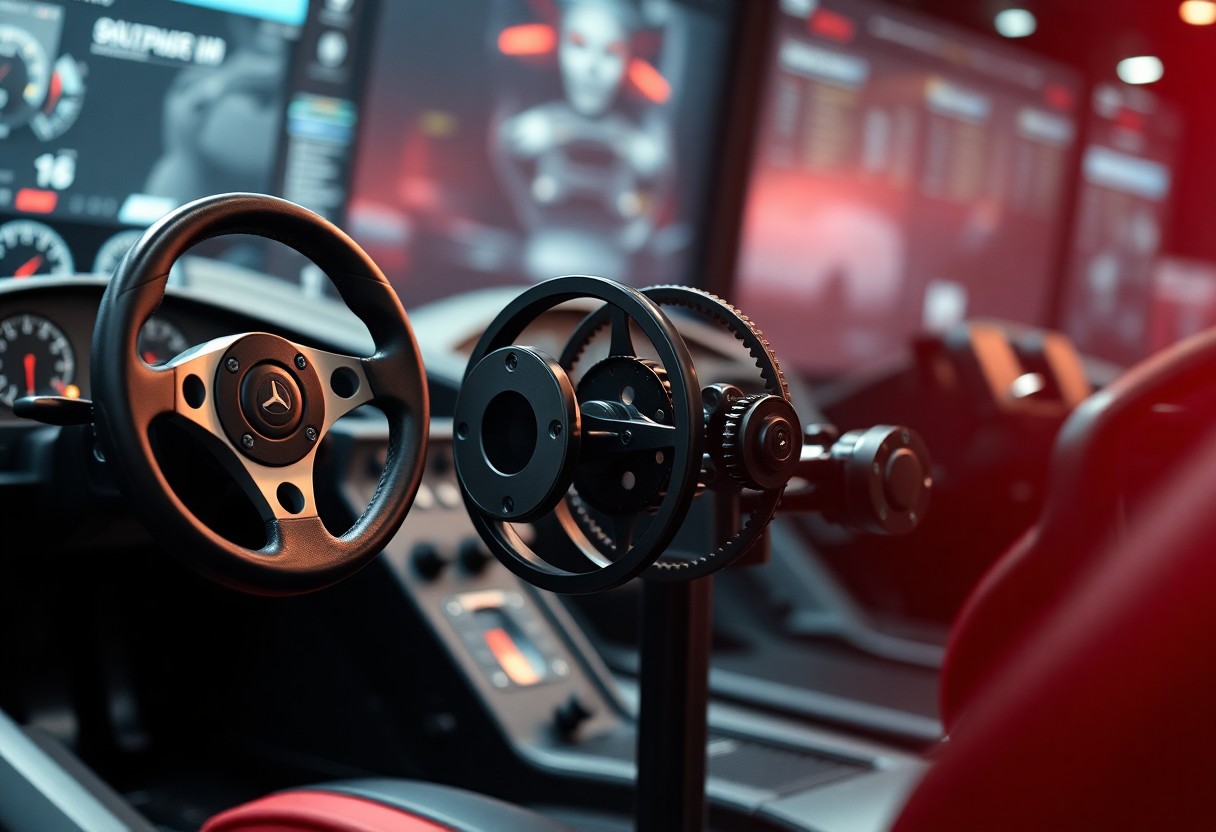
Drive systems use a belt mechanism to transfer motion from the motor to the steering wheel. This design offers a balance between performance and cost, making them a popular choice for amateur racers. While they deliver decent feedback, they may not replicate the raw sensations provided by direct drive systems.
And while belt drive systems can be quieter and smoother during operation, they often come with a trade-off in terms of response time and torque delivery. For example, they may exhibit a slight delay in force feedback, which can impact your overall racing experience, especially during more aggressive maneuvers.
Gear Drive Systems
Belt drive systems use a gear mechanism to create torque, providing distinct advantages in affordability and ease of use. However, the mechanical complexity can result in noise and vibrations during operation, potentially detracting from the immersion you seek in your simulation experiences.
This mechanical design can lead to a less consistent force feedback experience, as gear backlash can introduce unwanted slack in the system. While gear drive setups can be budget-friendly and are often easier to maintain, they may leave you wanting if you’re seeking an ultra-realistic sim racing experience.

Performance Comparison
There’s a distinct difference in performance among direct drive, belt drive, and gear drive systems, impacting your sim racing experience significantly. Each system offers unique benefits tailored to different gamer preferences, from the responsiveness of direct drive systems to the smoothness of belt and gear drives.
Performance Overview
| Drive Type | Performance Characteristics |
|---|---|
| Direct Drive | Ultra-low latency, high torque output, realistic feedback. |
| Belt Drive | Smooth operation, decent torque, potential for wear over time. |
| Gear Drive | Good feedback, but may exhibit more noise and backlash. |
Force Feedback and Responsiveness
After using a direct drive system, you’ll notice an immediate improvement in force feedback and responsiveness. The MOZA R12, for example, features ultra-low force feedback latency and a rapid steering response, all thanks to its advanced 280MHz processor. This means that as you make a movement, you feel that connection instantly, enhancing your overall racing experience.
Torque Output and Consistency
Consistency in performance is one of the hallmarks of direct drive systems. While direct drive offers maximum torque output, belt and gear drives may struggle to match this level under high-demand situations. This results in less consistent feedback, which can affect your ability to react swiftly during critical moments in a race.
Force plays a significant role in how you experience sim racing. With a top-tier systems featuring ultra-low torque ripple and a robust high-torque range, you benefit from sustained performance even during rapid direction changes. This consistent torque ensures that you maintain control and feel connected to the virtual environment, enabling you to drive with precision and confidence.

Build Quality and Durability
Your choice of sim racing wheelbase can significantly impact your overall experience, especially when it comes to build quality and durability. Direct drive systems feature aviation-grade aluminum and innovative designs that ensure longevity and resilience. In contrast, belt and gear drive systems may utilize less robust materials, which can affect their performance and lifespan over time. By investing in a well-constructed direct drive base, you secure a reliable and durable addition to your sim racing setup.
Material Composition
Quality materials form the backbone of any durable sim racing wheelbase. Most Direct Drive Wheel Base employs aviation-grade aluminum, known for its strength and lightweight characteristics. This high-grade material not only offers excellent rigidity but also enhances thermal management, which is vital for sustaining performance during long racing sessions. In comparison, belt and gear-driven systems often rely on plastic components, which can wear out more quickly and impact the overall reliability of the setup.
Long-term Reliability
At the heart of sim racing is the need for long-term reliability. Direct Drive features a robust construction and advanced materials that minimize wear and tear, ensuring a consistent performance over time. Additionally, with an intelligent temperature control system monitored in real-time, it effectively prevents overheating, which can lead to mechanical failures in less refined systems. This meticulous design likely means you can enjoy your racing experiences without constant concerns about wear issues impacting performance.
Further reinforcing its long-term reliability, most Direct Drives utilize an industrial conductive slip ring construction which provides a lifespan of over 5 million revolutions, ensuring smooth performance without degradation. The advanced force feedback algorithm also extends the lifespan of the system by reducing unnecessary strain on components. Ultimately, investing in a high-quality direct drive system can mean fewer interruptions and a more satisfying racing experience over time, making it a wise choice for dedicated sim racers.
User Experience and Adjustability
After exploring the differences among direct drive, belt drive, and gear drive systems, you will find that user experience and adjustability play a significant role in performance. Direct drive systems offer ultra-low latency and an immersive experience, allowing you to fine-tune settings easily through software control, combining realism with personal comfort.
Realism in Simulated Environments
With a direct drive system, you experience unmatched realism as it closely replicates the steering feedback of both road and race cars. This heightened level of detail allows you to feel the nuances of the track surface and vehicle behavior, bringing you closer to genuine driving sensations.
Customization Options
User control extends beyond just the hardware; you can personalize your setup through various customization options available in most OEM’s app or propriety software. These apps allows you to adjust force feedback, pedal settings, and even share configurations seamlessly across devices, ensuring a tailored driving experience.
Customization features include adjustable force feedback settings, allowing you to calibrate your wheel sensitivity and response curves to match your driving style. The ability to modify these parameters can greatly influence your overall racing experience, empowering you to optimize your setup for different tracks or vehicles. The innovative software also provides one-click importing for easy transfers, making it convenient to shift your preferences whenever necessary.
Price and Value Analysis
Now, when considering sim racing setups, the price and value vary significantly across direct drive, belt drive, and gear drive systems. Direct drive systems may command a higher upfront investment due to their advanced technology and superior performance. However, for serious sim racers, the unparalleled realism and responsiveness can justify the expense, making it a worthwhile investment in the long run.
Initial Costs
Any sim racing enthusiast will notice that direct drive units typically come with a higher initial price tag compared to belt and gear drive options. For example, the R12 Direct Drive Wheel Base features powerful performance enhancements that justify its cost, ensuring that you receive top-tier quality and responsiveness right from the start.
Long-term Investment Considerations
Between the different driving systems, long-term investment considerations play a pivotal role. While direct drive units may appear expensive initially, their durability and superior performance can ultimately save you money on replacements and upgrades over time. Direct drive systems offer a more immersive experience, reducing the need for frequent enhancements to your setup.
Investment in a direct drive system often leads to enhanced performance and longevity, well worth the premium price. As you engage with various sim racing titles, such as Assetto Corsa or iRacing, the precision and feedback provided by direct drive technology will enhance your experience and skill development. Additionally, the advanced features like low FFB latency and smooth torque delivery of units are designed to last, giving you exceptional return value as they remain competitive with newer models. You can feel confident that your investment will elevate your racing experience for years to come.
Recommended Use Cases
Unlike belt and gear drive systems, direct drive systems offer unparalleled torque, responsiveness, and feedback precision, making them ideal for serious sim racers seeking the most authentic experience. These systems excel in various racing environments, providing nuanced feedback from the virtual vehicle that enhances immersion and control, whether on the road or track.
For Casual Racers
With a focus on enjoyment rather than the highest level of performance, casual racers might find belt or gear drive systems more adequate. These alternatives are generally more affordable and provide a decent sim racing experience. The trade-off is in the lower fidelity of feedback and potential latency, which may not matter as much to those who race primarily for fun.
For Professional Sim Drivers
By using a direct drive system, professional sim drivers benefit from technology that offers extreme precision and control. You’ll notice a significant difference in simulated vehicle handling, resonance response, and track surface feedback, allowing you to make split-second decisions during races.
Cases for professional sim drivers are strengthened by features like ultra-low FFB latency and ultra-low torque ripple, which enhance your performance during competitions.
You have to chose what is right for you
Now that you’ve explored the differences between Sim Racing Direct Drive, Belt Drive, and Gear Drive systems, you can make an informed choice based on your needs. Direct Drive offers superior force feedback and precision, ideal for serious racers seeking realism. Belt Drive provides a balance of performance and affordability, while Gear Drive systems are typically more budget-friendly but may compromise on feedback quality. By evaluating your preferences and budget, you can select the best setup that enhances your racing experience and aligns with your racing ambitions.