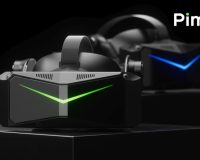

VR technology has rapidly evolved, with two of the leading headsets in the market being the Pimax Crystal Light and Meta Quest 3. In this article, we’ll compare the key features of these two headsets, analyze their strengths, and help you determine if it’s worth upgrading from Quest 3 to Crystal Light or which one is the best fit for your needs.
Key Specifications Comparison
Features
Pimax Crystal Light
Meta Quest 3
Display Tech
QLED + Mini LED (local dimming)
LCD
Resolution
2880×2880 per eye
2064×2208 per eye
Pixel-per-degree
35 PPD
25 PPD
Connection
Native DisplayPort
USB-C (Meta Quest Link) or Air Link
FOV
115° horizontal
110° horizontal
Weight
950g (balanced strap)
515g (requires aftermarket strap)
Tracking
Inside-out + Lighthouse optional
Inside-out
Price
$858 USD
128 GB model: $499 USD
512 GB model: $649 USD
Unmatched Clarity
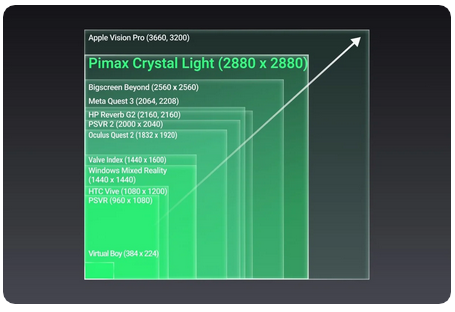
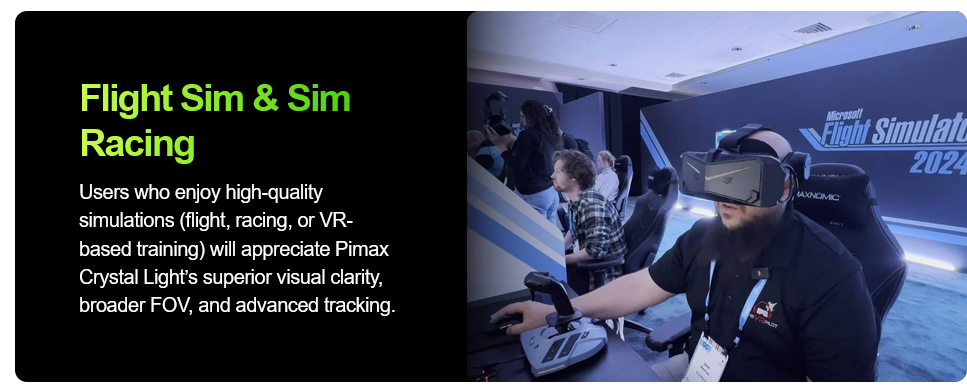
Pimax Crystal Light boasts a 2880 x 2880 per eye resolution, significantly surpassing the 2064 x 2208 per eye found in Meta Quest 3. This results in sharper details, crisper text, and an overall clearer visual experience, making a notable difference in sim racing and flight simulation, where fine details matter.

Uncompressed Native 4K
The native Display Port connection in Pimax Crystal Light eliminates the compression artifacts that affect Meta Quest 3’s Wi-Fi or Type-C Link cable solutions. Testers noted: “Even with a 4090, Quest 3’s encoding overhead steals precious GPU resources that Crystal Light dedicates entirely to rendering.” For demanding titles like MSFS 2024, this means maintaining 90+ FPS at full resolution, where Meta Quest 3 struggles with stutters.
True-to-Life Color Vividness
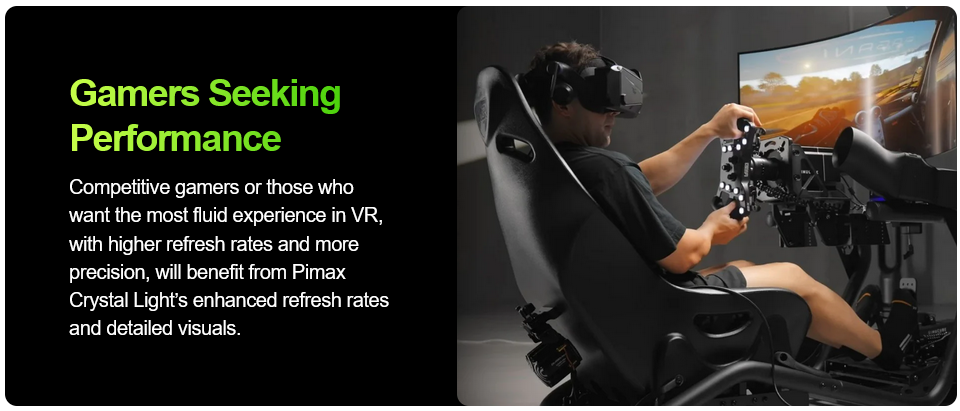
With its QLED panel and mini-LED local dimming, Pimax Crystal Light delivers what reviewers describe as “glossy magazine quality” visuals. Unlike Meta Quest 3’s LCD, which struggles with washed-out blacks, Pimax Crystal Light achieves OLED-like contrast, offering deep blacks and vibrant highlights. As one simmer put it: “Nighttime racing becomes transformative when you experience actual blackness between streetlights.”

Optical Superiority
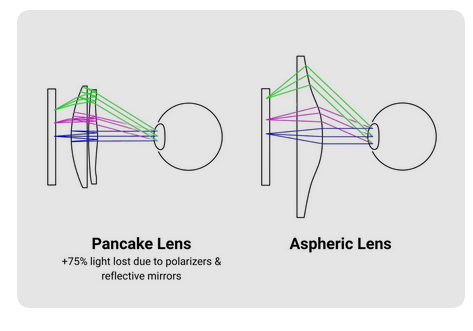
The glass aspheric lenses in the Pimax Crystal Light provide higher durability, better light transmission, and a larger sweet spot compared to the resin pancake lenses used in Meta Quest 3. Unlike pancake lenses, which rely on multiple light reflections and can cause brightness loss and distortions, aspheric lenses direct light more efficiently, maintaining consistent sharpness across a wider area.
Uninterrupted Power for Long Sessions
Unlike the battery-dependent Quest 3, Pimax Crystal Light is powered directly by your PC, ensuring unlimited playtime. One reviewer highlighted the difference: “Two-hour wireless sessions became frustrating; with Crystal Light, I can run endurance races without worrying about charge levels.” For sim racers and flight enthusiasts, this means marathon sessions without mid-race battery anxiety.
Areas Where Crystal Light Falls Short Compared to Quest 3
No Standalone Mode
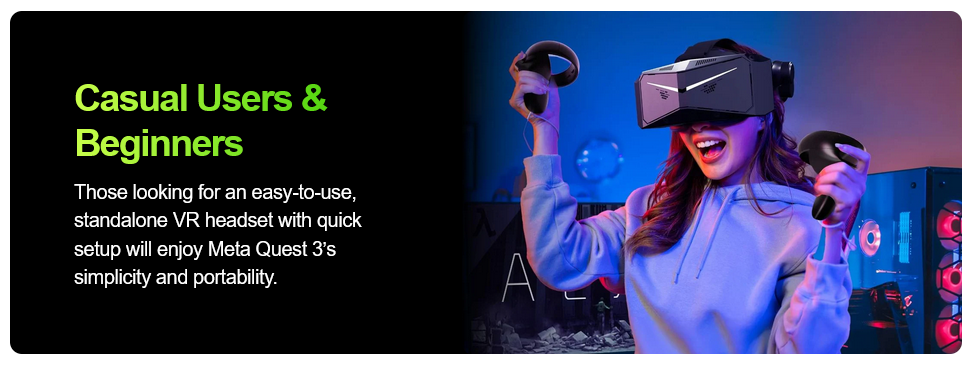
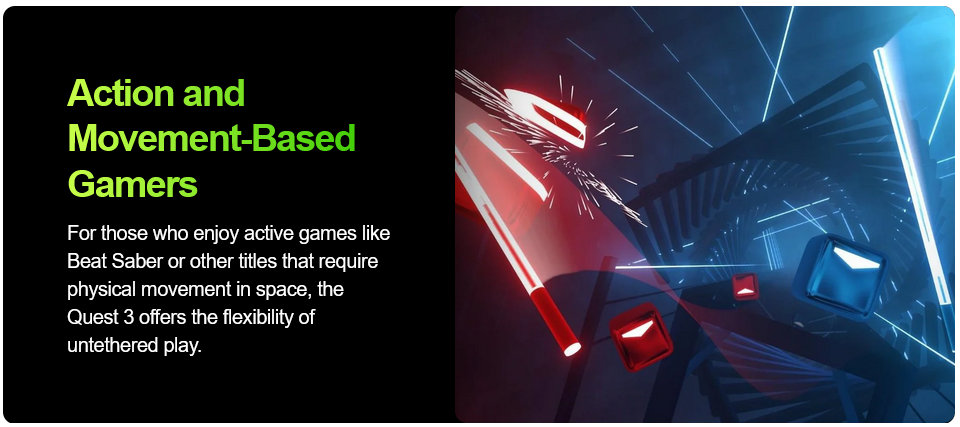
Meta Quest 3 can run games independently, making it more convenient for casual, movement-based titles like Beat Saber. Pimax Crystal Light, in contrast, requires a PC connection but offers vastly superior visuals for seated simulation gaming.
Slightly Heavier, but Well-Balanced
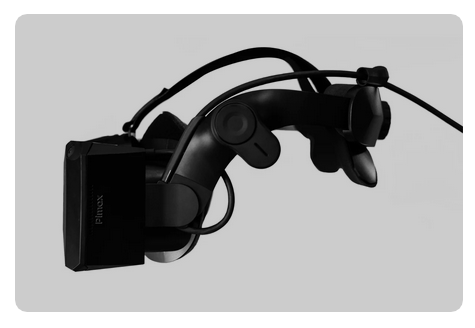
While Pimax Crystal Light is heavier than Meta Quest 3, its well-balanced design and improved padding make it more comfortable than expected, especially for long seated sessions.
“Despite the Crystal OG being heavier, I find it very well balanced and, surprisingly for me more comfortable than the Quest, which I was using with the official battery strap.”
Read the original post “Pimax Crystal Review from a Quest 3 User“.
Requires a High-End PC
Unlike Meta Quest 3, which works on its own, Pimax Crystal Light needs a powerful PC. An RTX 3080 provides a decent experience, but an RTX 4070 or higher is recommended for the best performance. If you already have a strong setup, Crystal Light fully utilizes its power.
Higher Upfront Cost, Better Long-Term Value
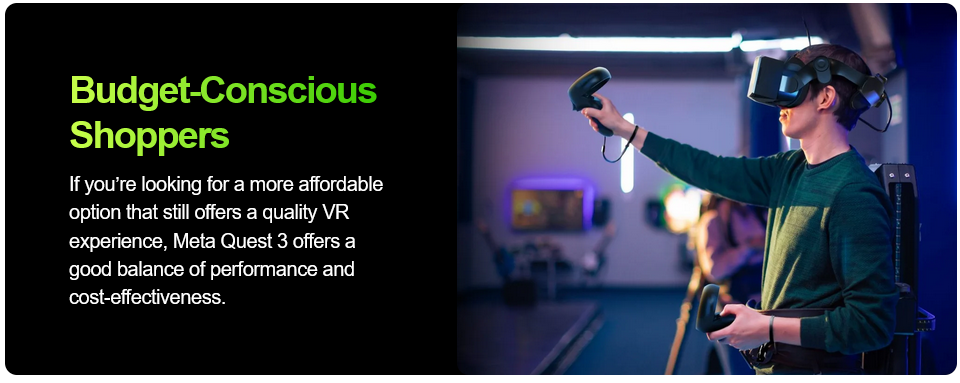
While Pimax Crystal Light costs more initially, Meta Quest 3 often requires extra purchases (head strap, battery, storage) that bring its total price close to $800. Meanwhile, Crystal Light’s unmatched clarity rivals headsets that cost 1.5–2x more, making it the best value for high-end VR.
Which Users Are Best Suited for Pimax Crystal Light?
Which Users Are Best Suited for Meta Quest 3?